Understanding Spirulina’s Role in Alcohol Detox
- The phycocyanin pigment in spirulina directly combats the free radicals that alcohol creates in liver tissue, reducing oxidative stress at the cellular level.
- Chronic alcohol consumption depletes vital nutrients like B vitamins, zinc, and magnesium — all of which spirulina provides in significant quantities.
- The polysaccharides in spirulina serve as chelating agents, attaching to heavy metals like mercury, lead, and cadmium and aiding the body in eliminating them.
- Clinical studies indicate that spirulina supplementation can decrease AST and ALT enzyme markers — the primary indicators of liver damage associated with alcohol consumption.
- While spirulina is not a substitute for medical detox, the evidence supporting its liver-protective compounds is strong enough to warrant serious consideration — continue reading to learn more.
Spirulina doesn’t merely aid detox in a broad, general sense — it addresses the specific biological harm that alcohol inflicts, compound by compound.
When seeking natural detox support, most people want a substance that has a real effect, not just a green powder that appears healthy. Spirulina’s reputation is well-deserved due to its bioactive compounds — phycocyanin, chlorophyll, polysaccharides, and amino acids — all of which have a proven role in liver protection and toxin elimination.
How Alcohol Affects Your Liver and Nutrient Levels
Your liver is responsible for metabolizing about 90% of the alcohol you drink. Each time you have a drink, your liver has to focus on breaking down ethanol, which takes precedence over fat metabolism, protein synthesis, and toxin filtration. Over time, this can lead to a build-up of fat (fatty liver), inflammation, fibrosis, and possibly cirrhosis. The damage doesn’t happen slowly and invisibly – it can be seen in blood tests as elevated AST and ALT liver enzymes, long before any symptoms show up.
The Way Alcohol Strips Your Body of Vital Nutrients
Alcohol is the enemy of nutrition. It prevents your body from absorbing B vitamins (most notably B1, B6, and B12), zinc, magnesium, and selenium — all of which are necessary for your liver to function properly. Additionally, it causes your body to excrete these minerals in your urine at an increased rate, causing you to lose them more quickly than you normally would. This leads to a snowball effect of deficiency that hampers your liver’s ability to detoxify anything, including the alcohol itself. For more information on how nutrition can aid recovery, explore the top holistic nutrition books for alcohol use recovery.
One of the most overlooked issues with alcohol-related liver problems is that the damage isn’t just from ethanol. It’s also from the nutrient depletion that makes the liver progressively less capable of doing its job. Replenishing these nutrients is a key goal of any effective detox strategy, and this is where spirulina’s nutritional density comes into play.
Chronic Alcohol Use Leads to Oxidative Stress and Liver Damage
Alcohol, when broken down, produces reactive oxygen species (ROS) — unstable molecules that cause liver cells to be attacked and inflammation to occur. This oxidative stress is a major cause of liver disease related to alcohol. The liver has its own defense system against antioxidants, which is centered around glutathione, but chronic use of alcohol uses up glutathione faster than the body can make it. When this protective buffer is gone, oxidative damage quickly increases.
The Challenge of Heavy Metal Buildup in Alcohol Detox
We encounter heavy metals such as lead, mercury, arsenic, and cadmium in our environment every day — through contaminated water, specific foods, and industrial pollution. Our liver is tasked with the job of filtering these metals out of our system. However, when the liver is already burdened with processing alcohol, it can’t clear out heavy metals as effectively. Studies have found that these metals can cause oxidative damage in their own right and can contribute to conditions like fatty liver disease, ciricosis, and even cancer when they’re allowed to build up in the body.
The beauty of spirulina in this context is that it tackles both issues at once. Its antioxidant properties battle the oxidative harm caused by alcohol metabolism, while its chelating agents bind to and eliminate heavy metals. That’s two detox processes in one supplement. For more on its benefits, check out this Healthline article.
Why Spirulina Works for Detox
Spirulina is a blue-green microalgae that’s loaded with a high concentration of bioactive compounds. It’s not a one-trick pony — it operates through several overlapping pathways that together aid liver function and toxin removal. Understanding what each compound does helps you understand why the research consistently backs up its detox benefits.
Phycocyanin: Spirulina’s Antioxidant Powerhouse
Phycocyanin, the compound responsible for spirulina’s unique blue color, is also its most potent medicinal ingredient. It’s a powerful antioxidant that counteracts the harmful oxygen molecules produced in the liver when it metabolizes alcohol. This isn’t just a minor antioxidant effect. Research has shown that phycocyanin can significantly reduce markers of oxidative stress and protect liver cells from the inflammation caused by these oxygen molecules.
Phycocyanin, in addition to its antioxidant properties, also shows anti-inflammatory properties at the cellular level. It blocks pro-inflammatory enzymes and cytokines, which means it can stop the inflammation cycle in liver tissue before it gets worse and becomes fibrosis or scarring. For someone in alcohol detox, this dual action — antioxidant and anti-inflammatory — tackles two of the most harmful processes occurring at the same time in the liver.
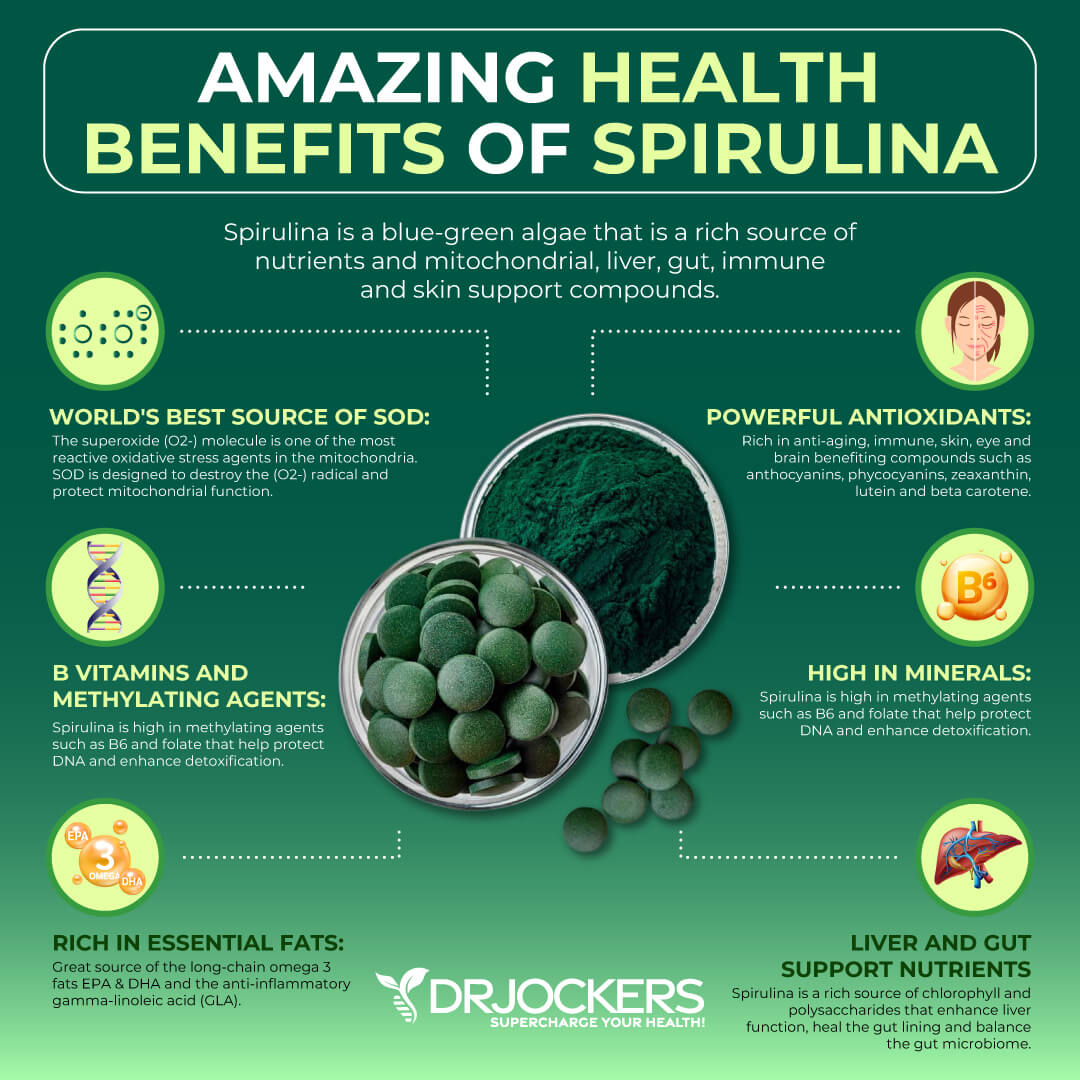
“10 Remarkable Health Benefits of …” from drjockers.com and used with no modifications.
The Role of Polysaccharides in Binding and Removing Heavy Metals
The polysaccharides in spirulina serve as chelating agents. These are compounds that attach to heavy metal ions, making it easier for the body to get rid of them. Studies show that spirulina can capture mercury and lead in its structure, significantly reducing the risk of kidney and liver damage from these harmful metals. Unlike some pharmaceutical chelating agents, the chelation process with spirulina doesn’t remove essential minerals from the body, making spirulina a milder but still potent option for supporting metal removal during detox.
Key Detox Compounds in Spirulina at a Glance
Compound
Primary Detox Role
Target Mechanism
Phycocyanin
Antioxidant & anti-inflammatory
Neutralizes free radicals, reduces liver inflammation
Chlorophyll
Hepatoprotective
Supports liver cell integrity
Polysaccharides
Heavy metal chelation
Binds mercury, lead, cadmium for excretion
Cysteine (amino acid)
Glutathione precursor
Boosts the body’s primary antioxidant defense
B Vitamins
Nutrient replenishment
Replaces alcohol-depleted nutrients
Zinc & Magnesium
Enzymatic liver support
Restores minerals critical to detox enzyme function
Amino Acids in Spirulina That Boost Glutathione Production
Spirulina is unusually rich in the amino acids glutamate and cysteine — and cysteine is the rate-limiting precursor to glutathione, the liver’s primary antioxidant defense molecule. When alcohol depletes glutathione faster than the body can replace it, liver cells become vulnerable to oxidative damage almost immediately. Supplying cysteine through spirulina gives the liver the raw material it needs to rebuild glutathione reserves and restore its own protective capacity. For those interested in holistic approaches, exploring holistic nutrition books can provide further insights into alcohol use recovery.
Replenishing Vitamins and Minerals That Alcohol Depletes
Alcohol use, especially chronic use, can deplete the body of essential vitamins and minerals. Spirulina is packed with vitamins B1 (thiamine), B2 (riboflavin), B3 (niacin), B6, and B12 — the exact vitamins that alcohol use depletes most. And we’re not talking about trace amounts. Spirulina has a high concentration of these B vitamins, providing significant replenishment, especially for someone whose diet has been affected by heavy drinking.
Not only does spirulina contain B vitamins, but it also provides zinc, magnesium, and iron. These three minerals are usually found in low levels in people who have liver stress related to alcohol. Zinc is especially important because it directly affects the function of liver enzymes and the regulation of the immune system. Replenishing these minerals is not optional during detox; it is essential for restoring the liver’s ability to process and eliminate toxins effectively.
How Spirulina Shields and Mends the Liver
There are two different ways that spirulina helps the liver: by shielding it and by mending it. It shields the liver through its antioxidant and anti-inflammatory compounds, which prevent further damage to liver cells during detox. It mends the liver more slowly, by replenishing nutrients and reducing hepatic lipid peroxidation. This is a process where free radicals, which are generated by alcohol, attack and degrade the fats in liver cell membranes.
Studies have found that spirulina decreases the amount of lipid peroxidation in the liver, while also increasing the activity of antioxidant enzymes in the liver tissue. This dual action – less oxidative damage occurring and more antioxidant capacity to deal with the remaining damage – leads to noticeable improvements in liver function indicators over time.
Lowering Liver Enzymes Indicative of Alcohol-Related Damage
The two enzymes that doctors monitor to determine liver damage are AST (aspartate aminotransferase) and ALT (alanine aminotransferase). These enzymes seep into the bloodstream when liver cells are under duress or dying, leading to increased levels in blood tests. High AST and ALT levels are some of the first detectable signs of alcohol-induced liver stress.
Choi et al. conducted a clinical trial that found participants who took spirulina supplements saw a significant drop in both AST and ALT levels. This isn’t just a superficial improvement in blood work — it shows a real decrease in liver cell stress and damage. The fact that spirulina can change these numbers is some of the most compelling clinical evidence that it can support liver detox.
Reducing Liver Inflammation
One of the main ways alcohol can cause lasting damage is by causing inflammation in the liver, a condition that can become hepatitis if it gets bad enough. This chronic inflammation can cause fibrosis (scarring), and if it’s not stopped, it can turn into cirrhosis. But spirulina’s phycocyanin and chlorophyll compounds have been shown to lower the markers of inflammation in liver tissue, which can stop this progression before it’s too late.
Timing is crucial when it comes to detox. The liver’s inflammatory response is at its highest during and immediately after alcohol withdrawal. Having anti-inflammatory compounds in your body during this window — instead of waiting until the acute detox phase is over — gives your liver a better chance of recovering without any extra scarring.
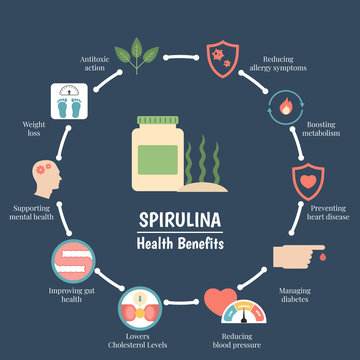
“The Nutritional Powerhouse: Blue …” from www.yanggebiotech.com and used with no modifications.
How Spirulina Compares to Standard Detox Methods
Standard medical detox protocols are primarily focused on managing withdrawal symptoms safely. This is usually done with medications like benzodiazepines, hydration support, and vitamin supplementation. High-dose thiamine is often used to prevent Wernicke’s encephalopathy. These protocols are essential and cannot be skipped for severe alcohol dependence. However, they do not fully address the ongoing oxidative damage, heavy metal burden, and antioxidant depletion that continue to affect the liver after the acute withdrawal phase is over. Spirulina’s biochemical mechanisms, such as chelation, glutathione support, and direct antioxidant activity, operate in a space that standard detox protocols largely ignore. This is where spirulina can add real complementary value. Research has specifically pointed out that spirulina’s detox approach has significantly fewer adverse side effects than pharmaceutical chelation therapies. This makes it a practical option for the extended recovery phase after acute medical detox is over.
Incorporating Spirulina into an Alcohol Detox Program
Integrating spirulina into a detox regimen requires thoughtful consideration about timing, form, and dosage. It isn’t a supplement to be taken at any time during this stage — the timing and amount of intake impacts the absorption and utilization of its compounds by an already stressed liver. Beginning with a smaller dose and gradually increasing is the usual method, allowing the digestive system to acclimate to the dense nutritional content of spirulina without causing gastrointestinal distress.
Powdered or Pill Form: Which is More Effective?
While both powder and pill forms of spirulina contain the same bioactive compounds, the speed of absorption and the ease of use during detox can vary. Spirulina powder can be mixed into water, juice, or smoothies and is usually absorbed slightly faster because it doesn’t need to dissolve like a pill does. However, for those in the early stages of detox who are dealing with nausea or lack of appetite, pills like those in the Nutrex Hawaii Pure Hawaiian Spirulina line are easier to take — no taste, no preparation, just water. The most important factor isn’t the form it comes in, it’s the regularity of use. Regular daily intake is what produces noticeable changes in liver enzyme levels and antioxidant status over time.
Best Times to Take Spirulina During Detox
When you take spirulina matters. It’s best to take it about 30 minutes before a meal, preferably breakfast or lunch, so your body can digest it without having to compete with a big meal. If you’re in the early stages of detox and don’t have much of an appetite, you can take spirulina with a small snack or a light smoothie. This can help prevent the nausea that sometimes comes with taking a dense supplement on an empty stomach. Learn more about the role of supplements in addiction recovery.
When it comes to dosage, most studies that back up the liver-protective effects suggest using between 1 and 8 grams per day. It’s recommended to start with 1–2 grams daily for the first week, then slowly raise the dosage to 4–6 grams as your body gets used to it. Dividing the dosage — half in the morning and half in the early afternoon — ensures that phycocyanin and other antioxidant compounds are continuously circulating in your bloodstream throughout the day, which is more effective than a single large dose.
Spirulina is a Helpful, but Not a Standalone, Detox Solution
What Spirulina Can and Cannot Do in Alcohol Detox
Spirulina Can Help With
Spirulina Cannot Replace
Reducing oxidative stress in liver tissue
Medical supervision during acute withdrawal
Lowering AST and ALT enzyme markers
Benzodiazepine therapy for severe withdrawal symptoms
Chelating heavy metals like mercury and lead
Pharmaceutical chelation for severe heavy metal poisoning
Replenishing B vitamins and minerals
High-dose IV thiamine for Wernicke’s encephalopathy prevention
Boosting glutathione production via cysteine supply
Structured addiction counseling and behavioral support
Reducing liver inflammation markers
Treatment for advanced cirrhosis or liver failure
Spirulina is truly impressive from a biochemical perspective — but it’s important to understand its place. It’s a supplementary tool, not a medical treatment. Severe alcohol dependence involves neurological, psychological, and physiological aspects that no supplement can address. The withdrawal phase, in particular, can involve life-threatening symptoms like seizures and delirium tremens, which require immediate medical attention.
Where spirulina truly shines, with backing from scientific research, is during the recovery phase — the weeks and months following initial detox when the liver is still in the process of healing, nutrient levels are low, and the body is actively trying to rid itself of the accumulated oxidative and heavy metal damage caused by heavy drinking. It’s during this prolonged recovery period that its liver-protecting compounds do their best work.
Combining spirulina with other well-known liver-supporting nutrients — like milk thistle (silymarin), N-acetyl cysteine (NAC), and B-complex vitamins — makes for a more complete recovery stack. Each of these compounds targets a slightly different pathway, and together they address the liver’s recovery needs more completely than any single supplement can. A healthcare provider familiar with integrative medicine can help structure this kind of multi-supplement approach safely.
It’s simple: include spirulina in a larger, medically supervised detox and recovery plan. It’s hard to ignore the well-documented bioactive compounds in spirulina, but it works best when it’s part of a larger plan rather than being the only thing you rely on.
Common Questions and Concerns
As with any natural detox supplement, spirulina brings up many questions. People often want to know about its safety, when to take it, and what to realistically expect from it. The answers provided here are based on solid research and evidence.
These aren’t just hypothetical questions. They represent the genuine worries of individuals going through alcohol recovery who wish to use natural remedies correctly without overvaluing or undervaluing their potential.
Does Spirulina Lessen the Urge for Alcohol?
While there is no concrete clinical proof that spirulina can directly decrease the desire for alcohol, there is a potential indirect method that deserves attention. Lack of nutrients — specifically zinc, magnesium, and B vitamins — are linked to heightened cravings and mood swings during alcohol recovery. As spirulina replenishes many of these exact nutrients, it may help maintain neurochemical stability, which can make cravings more manageable. This is a supporting role, not a direct craving-suppression effect.
Can I Take Spirulina While I’m Detoxing From Alcohol?
For most people, the answer is yes. Spirulina is generally safe and well-tolerated in doses up to 8 grams per day. It has been shown to be safe in clinical trials at therapeutic doses, with no significant adverse effects reported. However, you should always check with the medical team supervising your detox before starting any new supplement. Factors such as potential drug interactions, impaired digestive function, and the severity of your withdrawal symptoms can all affect whether a supplement is appropriate at a certain point in your detox. For additional insights, you might explore the benefits of fermented foods in substance use recovery.
If you have phenylketonuria (PKU), you should steer clear of spirulina since it has phenylalanine. Also, if you have an autoimmune condition, you should speak with your doctor before taking spirulina. This is because spirulina boosts the immune system, which could potentially make certain autoimmune responses worse.
When Will I See the Effects of Spirulina During Detox?
Once you take spirulina, its antioxidant properties start working in your bloodstream within a few hours, so you can expect some benefits to start immediately. But you won’t see any significant changes in your liver enzyme markers until you’ve been taking it consistently for a few weeks at the recommended doses.
Here’s what you can realistically expect, according to clinical research:
- Week 1–2: Antioxidant activity begins, early anti-inflammatory effects in liver tissue, initial nutrient replenishment underway
- Week 3–4: Heavy metal chelation becomes more pronounced with consistent dosing, glutathione levels start recovering
- Week 5–8: AST and ALT enzyme markers may show measurable decline in blood work, hepatic lipid peroxidation begins reducing
- Month 3+: Cumulative liver-protective effects are most significant; continued use supports ongoing recovery and liver regeneration
Consistency is the controlling factor. Sporadic use produces sporadic results. Daily intake at a consistent therapeutic dose is what the research is built on, and it’s what produces the outcomes reflected in clinical trials.
Is Spirulina Capable of Undoing Alcohol-Induced Liver Damage?
Truth be told, it’s a matter of how advanced the damage is. The liver possesses an extraordinary ability to heal itself — but only to a certain extent. Fatty liver and early-stage inflammation can be significantly reversed with the appropriate support, and the hepatoprotective compounds in spirulina are perfectly equipped to facilitate this reversal. Studies have shown that spirulina can reduce both liver inflammation and oxidative stress, which are the main causes of continued damage in this early-to-moderate stage.
Fibrosis, or the stage of scarring, can be partially reversed if it’s detected early. However, spirulina alone won’t be enough to reverse it. It can help to reduce the inflammation that leads to more scarring, which in turn slows down the progression of the disease and supports any remaining regenerative capacity. Cirrhosis, or the advanced stage of scarring, is mostly irreversible by any means. At this stage, spirulina’s role changes from supporting reversal to limiting damage.
The key is to identify and treat liver damage before it becomes fibrotic. Spirulina works best for those in the fatty liver or early inflammatory stage, when the liver’s regenerative functions are still working and simply need the correct biochemical environment to perform their job. For more information on holistic approaches to recovery, explore holistic nutrition books that support alcohol use recovery.
- Fatty liver (steatosis): Highly responsive to spirulina supplementation; good reversal potential with lifestyle changes
- Alcoholic hepatitis (inflammation): Spirulina’s anti-inflammatory and antioxidant compounds directly target this stage
- Early fibrosis: Partial reversal possible; spirulina slows progression and supports healing
- Advanced fibrosis/cirrhosis: Limited reversal potential; spirulina’s role is protective rather than curative at this stage
Does Spirulina Interact With Medications Used in Alcohol Detox?
No significant drug interactions between spirulina and standard alcohol detox medications (such as benzodiazepines, naltrexone, or acamprosate) have been documented in the clinical literature. Spirulina’s compounds are primarily metabolized through normal digestive pathways and do not appear to inhibit or induce the liver enzymes (CYP450) responsible for processing most pharmaceuticals. For those interested in alternative approaches, the healing properties of ginseng for alcoholism offer an intriguing complement to traditional methods.
However, spirulina does have a slight effect on the immune system and can act as a blood thinner when taken in large amounts. If you’re taking blood thinners like warfarin, you should keep an eye on your INR levels when you start taking spirulina. Its vitamin K content could potentially affect the stability of your blood’s ability to clot. This doesn’t mean you shouldn’t take spirulina — it just means you should monitor your health carefully.
It’s easy to remember: always tell your doctor if you’re taking spirulina while on detox medications. It’s a safe supplement with a great track record, but your medical team needs to know so they can manage all of your medications — both supplement and pharmaceutical — together. Natural and conventional medicine work best when they’re working together, not competing.