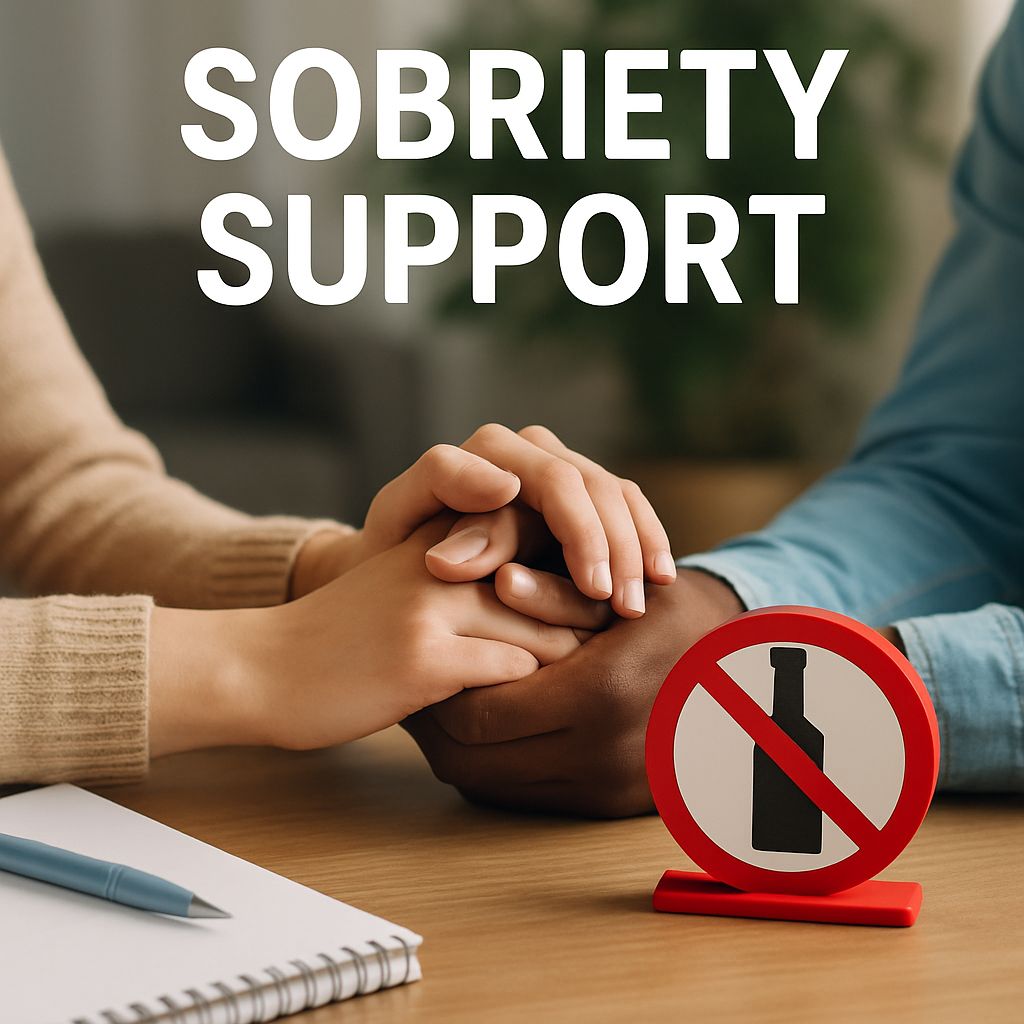
- Having a sober buddy creates “felt accountability” — this is the understanding that your decisions will be seen and evaluated by someone who is important to you, which studies show is a critical factor in achieving sobriety success.
- A sober buddy is not the same as a sponsor — the relationship is mutual, peer-based, and focused on day-to-day support rather than formal guidance through a program.
- Most online accountability groups are unsuccessful because they lack the real human connection needed to create genuine felt accountability — continue reading to find out what actually works instead.
- Peer support boosts self-esteem, which is one of the most overlooked but essential factors in maintaining motivation throughout long-term recovery.
- Apps like I Am Sober combine personal tracking with community connection, helping users build the kind of accountability that sticks beyond just counting sober days.
Sobriety Is Challenging Alone — Here’s What Actually Works
Sobriety doesn’t have to be a solo journey, and the data supports that. Research consistently shows that peer support is a critical component of successfully maintaining sobriety. The problem is, most people either go it alone or reach for support systems that look good on paper but fall apart in practice. Understanding what real accountability looks like — and how to build it — is the difference between white-knuckling it and actually thriving in recovery.
Resources such as I Am Sober are designed around this very idea, merging personal sobriety monitoring with a community that understands your struggles. However, before we explore tools and strategies, we need to first understand a fundamental concept: the sober buddy.
Defining a Sober Buddy
A sober buddy is a peer who accompanies you in your journey to recovery. This person holds you accountable, checks in on you regularly, and genuinely cares about your sobriety. Unlike a therapist or counselor, a sober buddy is not a professional. They are someone who understands the struggle, often because they have experienced it themselves. The relationship is built on mutual trust, shared vulnerability, and consistent communication.
Imagine having someone on your team who will notice when you’re silent, who will celebrate your achievements, and who you’d sincerely hate to disappoint. That last part is more potent than it sounds. For more insights on maintaining sobriety, explore the benefits of I Am Sober, a helpful tool in your journey.
What Sets a Sober Buddy Apart from a Sponsor
While a sponsor, especially in programs like Alcoholics Anonymous, works within a set structure — guiding a sponsee through the 12 steps with built-in accountability. A sober buddy relationship, on the other hand, is more natural and mutual. There’s no hierarchy, no formal program, and no set structure. Both individuals in the relationship can be going through recovery at the same time, supporting each other without one person having authority over the other. It’s a peer-to-peer relationship, not a mentor-to-student one.
How a Sober Buddy Relationship Works Daily
On a practical level, the relationship could include a morning check-in text, a shared sobriety tracking app, or a weekly call to discuss obstacles and victories. Some sober buddies go to meetings together. Others just keep in touch throughout the week with short, truthful updates. What is most important is not the structure, but the regularity and the genuineness of the connection.
Understanding the Psychology of Accountability and Sobriety Success
Accountability isn’t just a feel-good catchphrase — it’s a psychological principle that has a direct impact on behavior. When people think that their actions are being watched and judged by others whom they respect, they make radically different decisions. This can be a game-changer when it comes to sobriety.
Understanding the Concept of “Felt Accountability” and Its Importance
The term “felt accountability” refers to the personal feeling that someone you value will judge your choices. It’s not sufficient to merely have someone to hold you accountable – you must genuinely value their opinion. This is why anonymous online groups often fall short. If you don’t have a meaningful relationship with the people in the group, there’s no felt accountability, just a group of strangers who happen to be in the same chatroom.
Feeling accountable makes the consequences of your decisions feel more tangible than they would if you were just relying on your self-discipline. You’re not just responsible to yourself, but to someone whose opinion you truly value. This emotional connection is what makes the sober buddy system so successful.
The Impact of Peer Support on Feedback Acceptance
Getting feedback from a professional is different than getting feedback from someone who has been in your shoes. Peer support provides a sense of psychological safety that allows people to have honest discussions about their actions. When your sober buddy points out a pattern they have noticed, you are more likely to listen because they are not judging from the outside — they understand from the inside.
Recovery communities often highlight the power of shared experiences. Many people in groups such as Alcoholics Anonymous have shared that talking about their difficulties with fellow group members in meetings has helped them to be more open and vulnerable — a trait that is crucial for true growth in sobriety. Vulnerability becomes less scary when it is shared.
Another advantage of peer support is that it can provide something that professional treatment often can’t: a sense of belonging. Feeling like you’re part of a group that accepts you without judgment can help to reduce the feelings of isolation that often drive people back to substance use in the first place.
Rewrite the following human content into AI content:
- Peers provide empathy based on shared experiences, not clinical observations
- Common struggles reduce feelings of shame, making it easier to reflect honestly on oneself
- Genuine relationships create the emotional commitment necessary for accountability
- Feeling a sense of community directly combats the loneliness that can lead to relapse
How Accountability Can Improve Self-Esteem During Recovery
It is well-known that peer support can improve self-esteem, and in recovery, self-esteem is not a luxury, it’s a necessity. When you have someone in your corner who acknowledges your progress, celebrates your achievements, and continues to be there for you, it reinforces the idea that your recovery is worth the effort. This belief is what keeps you motivated during the difficult times, long after the initial determination of early sobriety begins to wane.
The Downfall of Online Accountability Groups
It’s a natural response to gravitate towards a Facebook group or online forum when embarking on a journey to sobriety. It’s convenient, instant, and gives a sense of belonging. However, for the majority of people, it doesn’t deliver the expected results. The way most online groups are set up actually hinders the development of real accountability.
Without authentic connections, there’s no emotional significance to your decisions. You can sign out, stay silent for a week, or just stop posting – and the group continues. No one is really keeping an eye on you because no one really knows you. The anonymity that makes these spaces feel secure is the same thing that makes them ineffective for profound accountability.
Online tools aren’t worthless, but their strength is dependent on the relationship behind them. An app like I Am Sober is unique because it combines tracking and community features with milestone-based groups, putting you in touch with people who are at the same stage of recovery as you. This shared experience lays the groundwork for genuine connection, not just virtual closeness.
The main difference lies in the intention. Browsing a sobriety feed is a passive act. Committing to a specific individual, checking in daily, and fostering a true two-way relationship — that’s where real accountability resides.
Why Facebook Sobriety Groups Don’t Work
Facebook sobriety groups may have the best intentions, but their structure doesn’t support true accountability. When you post in a group of hundreds or even thousands of strangers, there isn’t a single person who is truly following your journey. The dynamic is more of a broadcast style – you share, people react, and then the feed moves on. That’s not accountability. That’s a crowd.
The main problem is the lack of a sense of responsibility. When you don’t have a genuine connection with the people who read your posts, their thoughts just don’t have an emotional impact. You can go missing for two weeks and not a single person will notice in a significant way. For responsibility to be effective, someone has to care about you enough to notice when you’re silent – and you have to care about their opinion.
- Being part of a large group can make you feel less accountable because no one is really watching you
- Being anonymous can make you feel less emotionally invested in your choices
- Passive engagement (such as likes or reactions) can make you feel supported, but without any real substance
- There is no continuity — conversations start anew with every new post, making it nearly impossible to keep track of everything
- It is easy to leave — logging off has no social consequences
That being said, having the support of a community is very valuable. However, it is important not to confuse having access to a community with having real accountability. True accountability requires a specific person, a real relationship, and consistent mutual investment. A Facebook group can supplement your support system, but it should never be seen as the foundation of it.
Creating Tangible Accountability in Any Environment
To create tangible accountability, you need to shift your focus from a group to an individual. Find one person you admire and whose opinion you value. Make a pact to have regular, truthful conversations with them. Whether these conversations happen through an app, over the phone, or face-to-face is irrelevant. What’s important is that both of you care deeply about the result. As soon as your decisions seem to have real repercussions for a relationship that matters to you, accountability becomes less of a concept and more of a reality.
Finding the Perfect Sober Buddy
When it comes to finding the perfect sober buddy, it’s not about who has the most time — it’s about who is the best match for you. A mismatched accountability partnership can actually be counterproductive if it creates stress without real support, or if one person is significantly further along in their recovery than the other, causing an imbalance instead of empathy. Take the time to find someone who aligns with your situation, values, and communication style.
Choosing the Right Sober Accountability Partner
A good sober buddy isn’t someone who always agrees with you, but rather, someone who tells you the truth, even when it’s difficult, and does so out of love and respect.
Choosing a sober buddy is about more than just finding someone who shares your sobriety goals. It’s important to find someone who shares your values, communicates in a way that works for you, and is as committed to the partnership as you are. The most valuable sober buddy is someone who will consistently check in on you, respond to you honestly, and stick with you even when things get tough. You don’t want someone who’s all talk in the beginning but fades away after a few weeks.
Trustworthiness is a must. In the journey to sobriety, consistency is key — and a sober buddy who vanishes when the going gets tough can leave you in a worse position than if you were to go it alone. Seek out someone who has shown they can stick with it, whether that’s through their own path to sobriety or just in the way they are there for the people in their life.
Quality to Look For Why It Matters Consistency Regular check-ins create the structure that supports sobriety day-to-day Honesty Real feedback — not just encouragement — is what prevents blind spots Empathy Lived understanding of recovery creates psychological safety for vulnerability Availability A buddy who can’t respond in moments of crisis isn’t fulfilling the role Shared commitment Both people need to be equally invested for the relationship to work long-term Where to Find a Sober Buddy
The best places to find a sober buddy are environments where vulnerability is already normalized. AA and NA meetings are natural starting points — regular attendance builds familiarity, and familiarity is the prerequisite for trust. Outpatient treatment programs, sober living communities, and faith-based recovery groups are also strong options because they put you in sustained contact with people who are navigating the same journey.
Apps designed to aid in recovery, such as I Am Sober, arrange their communities based on sobriety milestones. This means that you’re already being paired up based on context. When you connect with someone in the same milestone group, you’re starting from a place of genuine common ground – not just a shared hashtag. That shared context is what makes the transition from online connection to real accountability partner far more natural.
Maximizing the I Am Sober App for Community Connection
The I Am Sober app is not just a sobriety counter. Its community features enable users to share their experiences, publicly track their progress within groups based on milestones, and interact with others who are at the same stage of recovery. This format tackles the main drawback of general online groups by placing you — in the virtual sense — in rooms with people who truly comprehend your current situation.
The system of making a daily pledge and review is how accountability becomes part of your everyday life. Every morning, you make a promise to remain sober. Every evening, you reflect on how your day went. This routine, over time, establishes a rhythm of self-reflection that strengthens your determination. When you have a sober buddy who is doing the same, the sense of accountability becomes tangible and constant.
The I Am Sober community is a huge network of people in recovery, with over 127 million daily pledges, 30 million addictions tracked, and 11 million stories shared. The size of the community is significant because it means that there is a high chance that you will find someone on the platform who has gone through something similar to you and can form a meaningful, long-term accountability partnership.
Maintaining a Long-Term Sober Buddy Relationship
It’s not too difficult to start a sober buddy relationship, but the real challenge comes in keeping it going. There will be awkward moments, times when one of you is having a harder time than the other, and the slow drift that can occur when the urgency of early sobriety becomes routine. Just like any important relationship, a long-term sober buddy relationship requires ongoing, intentional effort. For more insights on maintaining accountability, consider exploring resources like how to get accountability to stay sober.
Long-lasting partnerships are those in which both individuals view the relationship as a commitment, not a luxury. This means being there even when everything seems to be going well, checking in even when there’s nothing major to talk about, and being truthful when the dynamic starts to feel skewed. Recovery isn’t a timed event, and your accountability partnership shouldn’t be either.
Establish Expectations at the Outset
One of the main reasons sober buddy relationships crumble is due to unexpressed expectations. One person might expect daily communication, while the other thinks weekly is enough. One person might desire emotional support, while the other is solely focused on tracking progress. These misalignments don’t have to be deal-breakers, but they need to be discussed at the beginning, before resentment has the opportunity to develop. For those seeking structured support, exploring options like a Tricare approved alcohol rehab facility can provide additional resources and guidance.
- How often will you check in, and through what channel?
- What does a check-in look like — a text, a call, a shared app update?
- Are you comfortable being called out directly if your buddy notices warning signs?
- What’s the protocol if one person relapses?
- Is this relationship mutual, or is one person primarily in a support role?
Having this conversation early isn’t clinical — it’s respectful. It signals that you’re taking the partnership seriously and that you want it to actually work, not just exist in theory. Think of it as building the scaffolding that holds the relationship together when things get hard.
It’s important to check in on these expectations from time to time. What was effective during the first 30 days of sobriety might not be the best approach at the six-month mark. As both individuals evolve, the relationship should also evolve — but this only happens through conscious dialogue.
How Regularly Should You Connect with Your Sober Buddy?
There’s no one-size-fits-all answer, but the general rule of thumb is: check in more often than you think you need to, especially in the early stages of sobriety. Daily contact — even if it’s just a quick text — keeps the relationship fresh and reinforces the feeling of accountability that makes the partnership work. As sobriety becomes more ingrained and both parties develop more robust independent coping mechanisms, the frequency can naturally decrease. The most important thing is that check-ins are regular and honest, not just superficial “still sober, you?” messages.
What to Do When the Relationship Feels One-Sided
If you notice that you are always the one initiating, always the one listening, and rarely being asked how you are doing, it is a sign that you need to address. A one-sided accountability partnership doesn’t just fail to help the person carrying the load — it can actively drain the emotional resources they need for their own recovery. Name it clearly, without blame: explain what you’ve noticed, what you need, and give the relationship a chance to recalibrate before walking away from it entirely. For more insights, check out this article on how to get accountability to stay sober.
Tools for Sobriety That Boost Accountability
Effective tools don’t take the place of human interaction, they enhance it. When your relationship with your sober buddy is supported by regular, measurable habits, accountability ceases to be something you need to keep in mind and becomes a part of your daily routine. The most beneficial sobriety tools are those that make it easier to show up, not more difficult.
Making Daily Promises and Maintaining Sobriety Runs
It is a simple but effective act to start each day with a clear and deliberate promise to remain sober: it makes your commitment proactive instead of reactive. The I Am Sober app’s daily promise and review system turns this into a two-part routine – an intention in the morning and a reflection in the evening. Over time, this rhythm builds a kind of internal responsibility that strengthens any external responsibility your sober buddy provides. Sobriety runs add a visual, motivational layer on top of that – seeing a run of 60, 90, or 180 days makes the cost of a relapse feel tangible in a way that abstract commitment sometimes doesn’t. For those seeking additional support, exploring evidence-based therapies can provide effective treatment options.
Using Story Sharing in a Community as a Tool for Accountability
Sharing your story, whether it’s a small update about a difficult day or a quiet victory, does more than just provide a space for you to vent. It creates a visible record of your journey that others can see, respond to, and learn from. This visibility adds a layer of social accountability that enhances your one-on-one relationship with your sober buddy. On platforms like I Am Sober, where over 11 million stories have been shared, sharing your story publicly within communities based on milestones means that your update is seen by people who truly understand the context of your experience.
When you read about someone else’s struggle with a craving or their celebration of a milestone, it makes your own journey feel more normal and reinforces the idea that staying sober is both possible and worthwhile. The community becomes a mirror – reflecting back the reality that you are not alone and that the struggle you’re facing has been faced and overcome by others just like you.
Having a Sober Buddy is a Great Start, But It Won’t Solve Everything
- A sober buddy can provide a sense of accountability, but they are not a replacement for professional treatment, therapy, or medical support when needed
- The relationship is most effective when it complements a broader recovery plan, not when it bears the full burden of one
- Sobriety is a long-term commitment, and even the most effective accountability partnerships will have periods when communication falters or life interferes
- What distinguishes successful recoveries is not the lack of challenging periods, but the presence of sufficient support infrastructure to rebound when they occur
- A sober buddy is a vital component of that infrastructure, and often the most personal one
No single tool, relationship, or strategy will carry you through recovery on its own. But dismissing peer accountability because it isn’t a complete solution is like refusing to wear a seatbelt because it won’t prevent every injury. A sober buddy won’t guarantee sobriety, but they significantly improve the odds. The sense of accountability, the mutual commitment, the simple reality that someone is watching and caring, these things matter more than most people realize until they experience them firsthand. For those seeking professional treatment options, evidence-based therapies are often the most effective approach.
Here’s the real deal: individuals who incorporate solid, regular accountability into their recovery process tend to fare better. This isn’t because accountability is some sort of magic trick, but because isolation is one of the strongest weapons in addiction’s arsenal, and accountability is its direct counter. Each check-in is a tiny act of defiance against the temptation to go solo.
If you need to, start small. Make a promise to yourself today. Share an update. Reach out to someone who is on a similar path. Building recovery one truthful conversation at a time is still recovery. And it’s a lot more sustainable than trying to do it on willpower alone.
Common Questions
If you’re unfamiliar with the concept of sober buddies and accountability partnerships, it’s natural to have questions about how this all works in practice. The concept is simple, but the details are important — especially when you’re making decisions that impact your recovery.
Here are the most frequently asked questions people have when they are considering using accountability as a tool to achieve sobriety, answered in a straightforward and uncomplicated way.
What Does a Sober Buddy Do in Recovery?
A sober buddy is a friend who helps you stay on track during your recovery. They provide a level of accountability that helps you maintain your commitment to sobriety. They check in on you regularly, offer constructive criticism, celebrate your achievements, and make you feel responsible for staying sober. Unlike a sponsor or therapist, a sober buddy is a peer. Both of you are invested in each other’s success.
Can a Sober Buddy Substitute for Professional Treatment?
No. A sober buddy is a potent addition to professional treatment, not a substitution for it. If you are grappling with physical dependency, mental health co-occurring conditions, or a history of severe substance use, medical and clinical support is crucial and should always be the base of your recovery plan.
However, peer accountability provides something that professional treatment often cannot: the daily, human interaction that keeps you grounded between appointments. The two work best together — professional treatment provides the clinical structure, and a sober buddy provides the relational accountability that makes that structure tolerable.
How Can I Tell If My Sober Buddy Is a Good Match?
A good sober buddy is reliable, truthful, and makes you feel like the relationship is a two-way street. If you feel like you have to force yourself to check in, if you’re avoiding honesty to keep the peace, or if one person is always shouldering more of the emotional burden, you might need to rethink your choice of sober buddy. The best sober buddy relationships are both supportive and demanding — they provide a safe space for vulnerability and enough honesty for real personal growth.
What Does It Mean to Feel Accountable and Why Is It Important for Sobriety?
Feeling accountable means you believe that someone whose opinion you value will be evaluating your decisions. This concept is more than just having someone watch your actions — it necessitates a genuine relationship with real emotional consequences. In terms of sobriety, feeling accountable is the difference between a substantial partnership and a hollow formality. When you are concerned about your sober buddy’s opinion of your choices, the importance of that relationship directly impacts your actions when you are tempted.
Are There Apps That Can Help Me Stay Sober?
One of the most complete apps for sobriety is the I Am Sober app. It features a daily pledge and review system, tracks how long you’ve been sober, has community groups based on how long you’ve been sober, and a feature for sharing your story that has been used over 11 million times. The app uses methods that align with cognitive behavioral therapy (CBT) and motivational tools to help you reflect on your own and connect with others.
What makes I Am Sober stand out from the crowd of generic tracking apps is the way it’s structured around community. Groups are organized according to sobriety milestones, which means you’re connected with people who are at the same stage of recovery as you are – not just any old Joe who happened to download the app. This makes the community more relevant, more empathetic, and much more effective as a space for accountability.